


Blog
Natural vs Organic Dry Fruits: Which Is Better for Health?

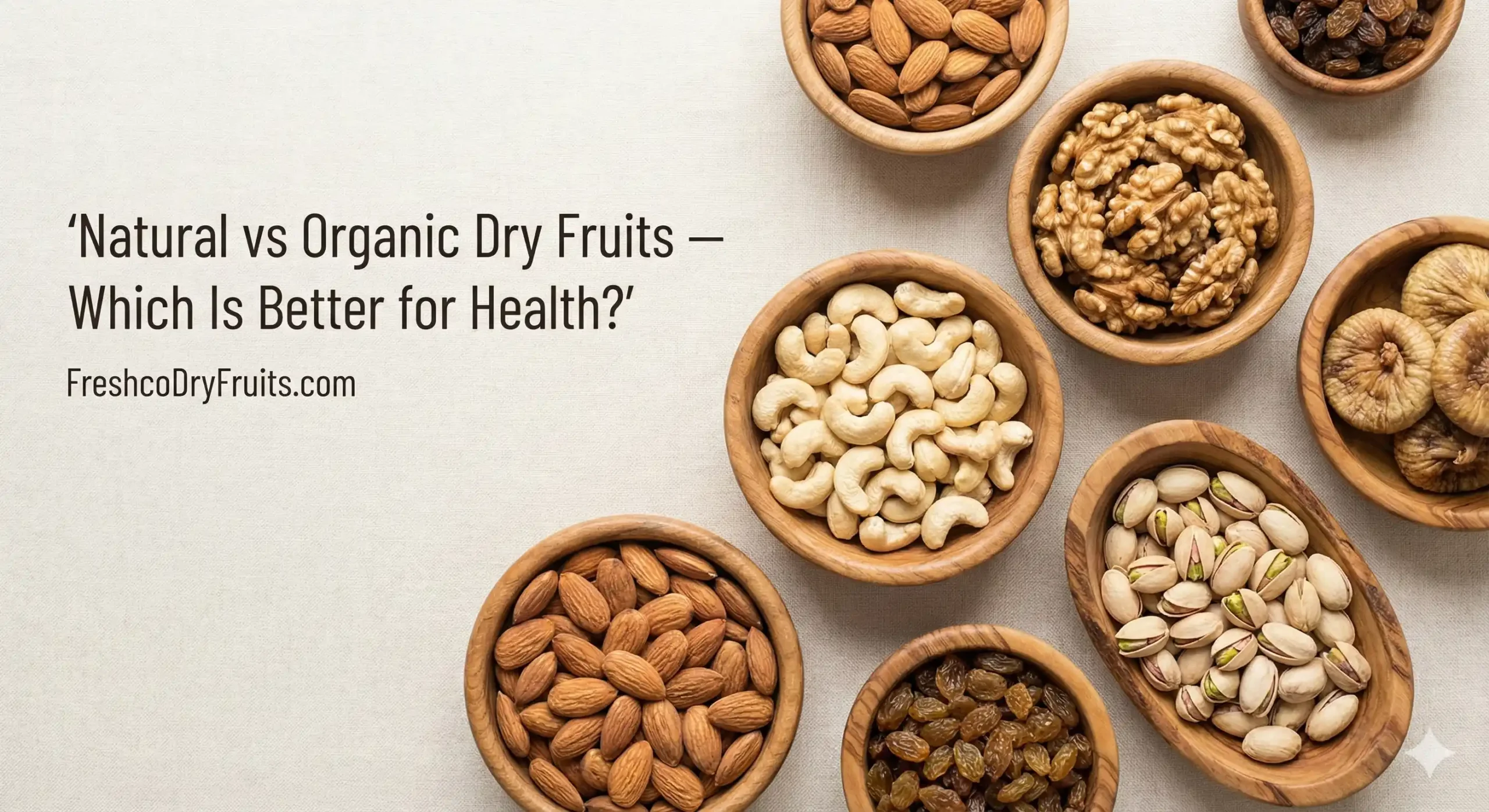
Natural vs Organic Dry Fruits has become one of the most discussed topics among health-conscious consumers. With increasing awareness of clean nutrition and chemical-free food, people are now more selective about the dry fruits they buy for their family and daily consumption. However, many customers still struggle to understand the difference between natural dry fruits and organic dry fruits. If you are among them, this detailed guide from FreshcoDryFruits.com will help you make an informed and healthy choice.
1. Why Dry Fruits Matter in Daily Nutrition
Dry fruits such as almonds, cashews, pistachios, walnuts, raisins, and figs are known as nutritional powerhouses. They contain vitamins, minerals, antioxidants, healthy fats, and natural fiber. Moreover, research shows that regular consumption of dry fruits may support heart health, brain performance, digestion, skin glow, immunity, and energy levels throughout the day. Therefore, dry fruits are commonly recommended for kids, working professionals, athletes, and senior citizens.
2. What Are Natural Dry Fruits?
Natural dry fruits are dried fruits that undergo minimal processing and contain no artificial colors, sugars, preservatives, or synthetic flavors. They maintain their natural oils, aroma, and texture. Natural dry fruits are harvested, dried, cleaned, graded, and packed with care. Because of their minimal processing, they retain the original taste of the fruit.
Key Characteristics of Natural Dry Fruits
✔ Minimal processing
✔ No artificial additives
✔ Original flavor preserved
✔ Nutrient retention is high
✔ Budget-friendly compared to organic
✔ Best for everyday consumption
Examples at FreshcoDryFruits.com include California almonds, premium cashews (W180/W240/W320), Iranian pistachios, American walnuts, and Turkish raisins.
3. What Are Organic Dry Fruits?
Organic dry fruits go a step further. These fruits are grown under strict organic farming methods. This means they are cultivated without synthetic fertilizers, pesticides, herbicides, or GMO seeds. Organic farming practices include crop rotation, composting, and natural pest control.
Key Characteristics of Organic Dry Fruits
✔ Cultivated without chemicals
✔ Non-GMO seed origin
✔ Environment-friendly farming
✔ Clean nutritional profile
✔ Certified by government bodies
Organic dry fruits are ideal for parents, fitness enthusiasts, and individuals looking to avoid chemical residue in food.
Organic dry fruits are certified under strict standards such as
🍃 USDA Organic
4. Natural vs Organic Dry Fruits – Clear Comparison
| Feature | Natural | Organic |
|---|---|---|
| Farming Method | Conventional | Chemical-free |
| Pesticides | Possible | Prohibited |
| Certification | Not required | Mandatory |
| Processing | Minimal | Regulated |
| Additives | None | None |
| Nutritional Purity | High | Very High |
| Pricing | Affordable | Premium |
| Target Segment | Daily consumers | Health-sensitive buyers |
From the table above, it becomes clear that both options have their own advantages, depending on consumer priorities.
5. Which Option Is Healthier?
When comparing Natural vs Organic Dry Fruits, the nutritional benefits are similar in terms of vitamins, minerals, antioxidants, and fiber content. However, organic dry fruits are considered cleaner because they are free from chemical residues and undergo strict certification processes. Therefore, organic dry fruits offer a slight edge for consumers with health sensitivities or young children.
6. Taste, Texture & Freshness Difference
Surprisingly, the taste difference is often subtle. Natural dry fruits taste fresh, raw, and authentic. On the other hand, organic dry fruits taste clean, mildly sweeter, and sometimes richer in flavor due to high soil nutrient levels. Texture remains largely similar in both cases.
7. Best for Kids & Seniors
When choosing dry fruits for kids or elderly individuals, organic options are usually preferred because of their chemical-free cultivation and purity. The elderly benefit from clean nutrition due to better digestion and better immunity support.
8. Best for Daily Consumption
For everyday snacking, natural dry fruits are a strong choice because they offer great nutritional value at an affordable price. They are widely used in Indian homes for cooking sweets, making dry fruit milkshakes, or as travel snacks.
9. Safety & Certifications – What to Check
Organic dry fruits undergo certification by:
✔ India Organic
✔ USDA Organic
✔ EU Organic
✔ Jaivik Bharat
This ensures transparency and authenticity. Natural dry fruits do not require certification, but trustworthy importers such as FreshcoDryFruits.com maintain strict quality control and traceability.
10. Price & Availability
Price remains one of the biggest practical differences. Organic dry fruits are generally more expensive due to:
✔ Certification costs
✔ Reduced yield
✔ Small-scale farms
Natural dry fruits offer great value for customers who consume dry fruits regularly.
11. Popular Natural Dry Fruits at FreshcoDryFruits.com
✔ Almonds (California)
✔ Cashews (W-series)
✔ Pistachios (Iranian & US)
✔ Walnuts (USA, Chile)
✔ Raisins (Black, green, golden)
12. Popular Organic Dry Fruits in the Market
✔ Organic Almonds
✔ Organic Walnuts
✔ Organic Raisins
✔ Organic Apricots
✔ Organic Berries
13. Best Time to Eat Dry Fruits
✔ Morning (empty stomach) – almonds, walnuts, raisins
✔ Mid-day snack – pistachios, cashews
✔ Night – soaked almonds for brain health
14. Final Verdict – Which Should You Choose?
If your goal is:
➡ Daily snacking + affordability → Natural dry fruits
➡ Chemical-free nutrition + purity → Organic dry fruits
The right choice depends on personal preference, health needs, and budget.
15. Why Buy from FreshcoDryFruits.com?
FreshcoDryFruits.com specializes in:
✔ Premium imported dry fruits
✔ Global sourcing from certified farms
✔ Clean quality standards
✔ Wholesale + Retail options
✔ Pan-India delivery
FAQ– Natural vs Organic Dry Fruits
Q1: Are organic dry fruits healthier than natural dry fruits?
Organic variants are cleaner due to chemical-free farming. Nutritionally both are similar.
Q2: Which is more affordable?
Natural dry fruits are more budget-friendly.
Q3: What is the difference between natural and organic dry fruits?
Natural dry fruits undergo minimal processing, while organic dry fruits are cultivated without chemicals and are certified by organic bodies such as USDA Organic and India Organic.
Q4: Can kids eat organic dry fruits?
Yes, they are recommended for children.
Q5: Where can I buy premium dry fruits online?
At FreshcoDryFruits.com with retail and bulk options.